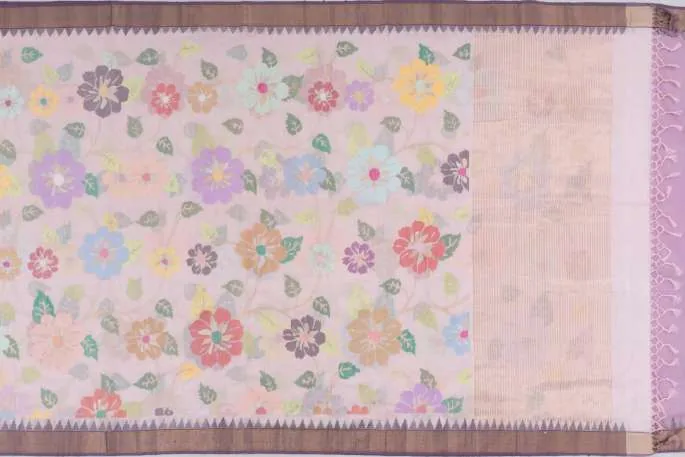
06 / The collection
Ponduru
Srikakulam district, Andhra Pradesh
The weave
The thread is made by hand. So is the cloth.
Patnulu: fine handspun, handwoven cotton. Its character begins before the loom, in the patient drawing and twisting of fibre.
The border and the motifs
The ground comes first. A plain body leaves room to see the yarn. Silk or zari borders can frame the cotton. Small buti add a measured rhythm where jamdani ornament appears. Contemporary Ponduru also carries elaborate jaal and narrative designs. The amount of ornament changes; handspinning remains the defining distinction.
From fibre to cloth
Spinning is part of the authorship. Clean and prepare the cotton. Draw out the fibre and give it twist. Wind the yarn, then prepare it for the loom. Handspinning leaves gentle variation in the thread; handweaving carries that living texture into the cloth.
Rare hallmark
A fish jawbone. Before a spinning wheel.
The serrated jawbone of the valuga fish is used to clean raw cotton and straighten the fibres around the seed. This small tool belongs to a larger chain of skilled work: preparing, spinning, sizing and weaving.
The colours
Off white
Warm cream
Natural
Ecru
Kora. The colour of the cotton. Traditionally, the cloth is left undyed. White hill cotton and the warmer-toned red cotton give subtly different grounds. Modern saris add dyed bodies, coloured borders and zari while keeping the handspun cotton at their centre.
A local system
Ponduru lies near Srikakulam. Its khadi cooperative was established in 1949, sustaining a tradition that drew Gandhi's praise in Young India. Local cotton, handspinners and weavers keep the story close to home.
See it in print
Ponduru as it appears in the book — motifs, colours, hallmarks and fold.
Open at page 42