09 / The collection
Kota
Kota, Rajasthan
The weave
A little cotton. A little silk. A great deal of air.
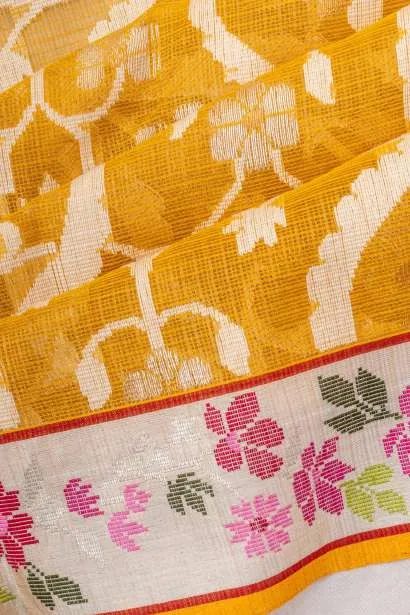
Kota Doria is an open checked cloth. Its quiet signature is the khat: a square formed by the arrangement of its yarns.
Border, pallu and motifs
First, the khat itself. Small buti leave the open ground visible. Extra warp and weft introduce zari borders and pattern into cloth woven on pit looms. A floral jaal or brocaded pallu brings greater richness. Contemporary Kota also welcomes printing and embroidery, while the open ground remains its defining feature.
Before the cloth exists
Maandi. Fine cotton yarn is traditionally sized with rice paste and wild onion juice. This preparation helps it withstand the loom and hold the open grid. The name Masuria recalls the tradition linking this cloth to Mysore. Turban cloth was an earlier use; the sari followed on wider looms.
Rare hallmark
The square is woven into the cloth. A commonly described khat has eight cotton and six silk yarns. The differing yarns and their spacing create the characteristic checks.
Hold it to the light and the checks become almost transparent: a little graph of air.
The colours
Ivory
Pale blue
Lilac
Zari
Pale grounds let the light through. Ivory, pastels and soft colour keep the open checks easy to see. Brighter grounds and richly worked borders belong to the repertoire too. Lightness begins in the weave.
The fold
The fold, and why
Let the khat guide a loose square. Bring the edges together along the checks. Keep the layers light, without pressing a hard crease.
Sizing softens with washing, so an older Kota may settle differently from a new one.